A recent comprehensive preliminary report by the UN Human Rights Council concludes that the Islamist regime in Iran has committed crimes against humanity during the crackdown on nationwide protests in 2022. It specifically refers to the physical violence that led to the death of young Iranian woman Mahsa (Jina) Amini while in the custody of the country’s „morality police“.
This incident sparked nationwide protests demanding the end of the Islamic Republic and the rule of the mullahs. The international community now faces the critical question of whether the European Union (EU) and the U.S. will call for prosecuting those involved in such acts.
The legal framework is overstretched
The EU needs a new legal strategy towards the Islamist state of Iran. As a basis and justification for the alleged crime against humanity, four mass crimes can be cited:
-
The mass executions of political prisoners in the late 1980s
-
Involvement in the suppression of protests in 2019
-
The unpunished shooting down of a Ukrainian passenger plane in January 2020
-
Involvement in the crackdown on nationwide protests in 2022
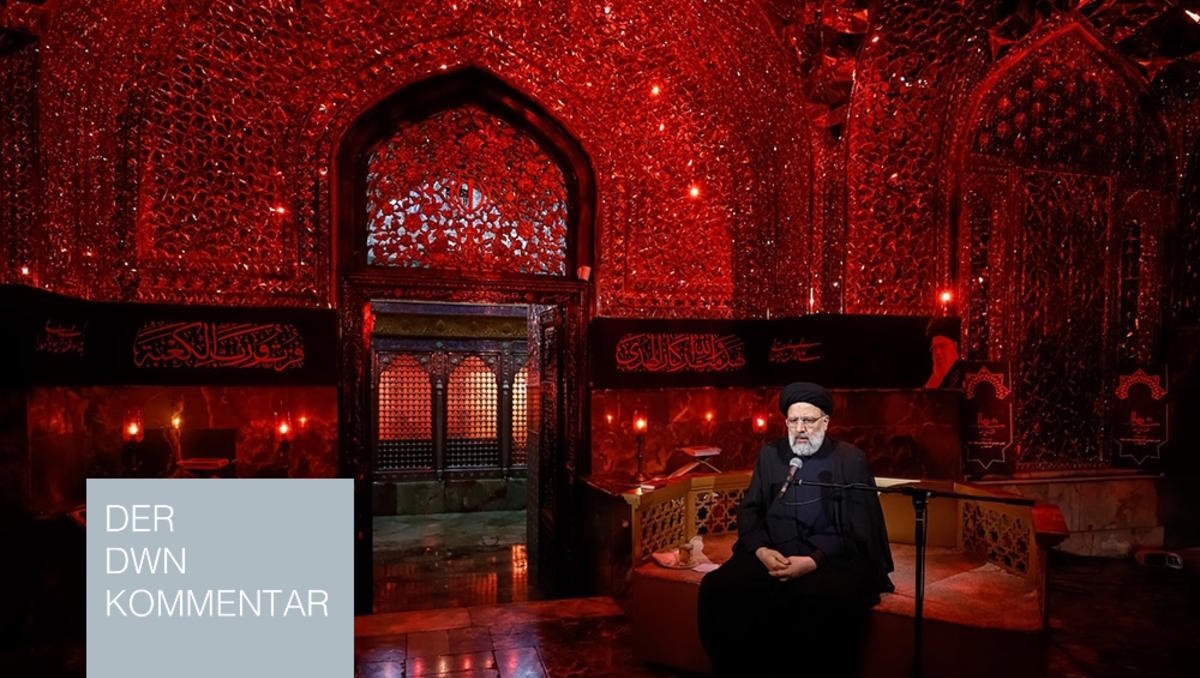
The Islamic Republic, therefore, operates in a politically, socially, and legally unbearable dimension as a state form. One of the figures whose involvement in the mentioned atrocities and crimes is widely known is the current president, Ebrahim Raisi. He assumed office after a sham election in 2021, from which actual political opponents from the reform-oriented camp were previously excluded. Opposition and dissenters were not allowed to run under the regime long. This situation marks a low point in the long history of state oppression and human rights violations by the mullahs' power apparatus, which enjoys the support of Russia.
An infamous career
Raisi's career is overshadowed by his involvement in the mass executions of political prisoners in the late 1980s. In connection with these murders, Sweden has already set a precedent: Hamid Nouri, an Iranian judicial officer under Raisi in the 1980s, was arrested in Stockholm and found guilty in a trial. He was identified as a critical figure in the executions of political prisoners in Iran in 1988. On July 14, 2022, Nouri was sentenced to life imprisonment for „war crimes“ and „murder“ in the first instance. The Supreme Court of Sweden has since confirmed this verdict, meaning Nouri will serve a life sentence. This is the first legally binding verdict in the EU related to a mass murder involving Raisi. Raisi shows no remorse for his role in the executions, and even told the Qatari satellite television network Al Jazeera that he should be “praised and rewarded” for it.
The shooting down of a Ukrainian passenger plane in January 2020, which killed 176 people, occurred during Raisi's tenure as Chief Justice. That the prominent commanders of the time were not punished underscores his political mindset and inhumanity. The Iranian regime claimed that „human error“ was the reason for the incident — and largely kept the relevant court proceedings secret.
A manufactured crisis
A recent BBC investigative report revealed new insights: The base of the Tor-M1 air defence system, which was used to shoot down the Ukrainian passenger plane, was intentionally hidden from the unified Iranian military air defence command by order of Iran's Supreme Leader, Ali Khamenei. The reasons for this decision are not yet known.
It is suspected that the regime deliberately let the plane be shot down to stage a crisis in the country to avoid a war with the USA. This happened after a missile attack by the Revolutionary Guards (IRGC) on the US-operated air base Ain al-Asad and a military base in Erbil, Iraq. The government in Tehran denies these allegations.
Complicity in censorship
The repeated disregard for human rights and the impunity with which Raisi and the Iranian regime act pose a direct challenge to democratic states. As Chief Justice, Raisi oversaw the violent suppression of protests in 2019, during which, according to the news agency Reuters, up to 1,500 civilians were killed, some by direct headshots, and at least 7,000 people were arrested. The dissemination of information about these massive human rights violations was significantly hindered at the time since the internet was repeatedly blocked, and no photos or news could be sent abroad.
A company from Germany played a significant role in the internet blackouts: In 2023, research by „netzpolitik.org“, a portal for digital rights and privacy, „Correctiv“, a center for investigative journalism, and the national newspaper „taz“ revealed that the company Softqloud from North Rhine-Westphalia helped the Iranian regime isolate the country from the global internet. As an offshoot of the company Arvancloud, Softqloud hosted websites for the Iranian government.
German politics in the human rights dilemma
Despite alleged connections to the Revolutionary Guards (IRGC) and intelligence services in Iran, German authorities did not stop these companies. The EU sanctions imposed on them no longer exist. Tehran blocked the internet with their support to maintain control over the flood of information and suppress the population. This was evident during the mass protests in Iran. Softqloud was vital as it connected Iran to the internet and handled payments for Arvancloud, circumventing US sanctions. German authorities did not respond despite indications.
Germany continues to face an essential task against the backdrop of this crime: Silence and inactivity must end because they undermine the EU's credibility.
Supporting democratic freedom movements in Iran is not just a question of solidarity during protests and unrest. Still, it should also be reflected more strongly than ever in internationally recognized legal measures.
Many skeptics might argue that pursuing Ebrahim Raisi could worsen relations between supporting countries and Iran. They often also point to retaliatory measures and the danger of increasing international isolation. From their perspective, this could also impair international agreements. However, it should be mentioned that this could create a precedent for global accountability and against impunity.
Global accountability
Democratic states must set a strong signal against ongoing human rights violations. Pursuing Ebrahim Raisi is an essential first step. Despite numerous documented human rights violations, he was able to visit the USA in recent years. In 2023, members of his delegation even insulted and attacked reporters in New York. His repeated hate tirades known from the Islamic Republic ended with his departure from the USA — a poor testimony.
The principle of universal jurisdiction in international law (universal jurisdiction) enables states, including EU countries, to prosecute individuals, regardless of their nationality or political office, for serious international crimes such as crimes against humanity and war crimes. Although this principle can conflict with national laws, constitutional provisions, and the concept of diplomatic immunity, it is time to create new mechanisms and set a clear signal against the long-standing impunity of statesmen like Raisi and his highest superior, Khamenei. The first legal foundations for this were established in Sweden.
The influence and responsibility of great powers
In recent years, companies like Tiandy Technologies from China and various entities in Russia, despite criticism from human rights activists, have supported the regime in Tehran with surveillance technology – thus strengthening the regime's repression apparatus. Russia remains economically and militarily linked to the Islamic Republic despite international sanctions imposed due to its war against Ukraine. This support from authoritarian states underscores the global community's urgency for a unified and committed stance.
These situations test the credibility of the West both before its citizens and in any democratic future form in Iran. The ongoing resistance against the state apparatus in Iran, showing widespread rejection of the ruling regime, is seen by many observers as a harbinger of a possible revolution.
The stance of the great powers plays a crucial role here. The problems caused by the regime's ideology in Iran—from proxy wars in the Middle East to terrorist attacks in Europe and the USA—demonstrate the global scope. There needs to be a more intense and coordinated response from the international community to such activities and the far-reaching influences of the regime abroad.
The necessity for a new Iran policy
Even if Germany is among the countries that have paid no heed to some atrocities, there is an opportunity to take a leadership role here. The German government's Iran policy has long been based, among other things, on consultations with specific institutions and experts who have been satisfied with the existing structures. These essentially always assume the regime's irreplaceability or — in the best case— various forms and processes of reformability of the state to guide the German government according to particular political interests in Tehran. However, it is necessary to leave this comfort zone.
Through resolute action, Germany, and the EU should show that defending human rights and democratic principles is at the heart of their foreign policy. New and more intensive security cooperation and alliances can also counter security concerns.
---
Farhad Salmanian is a journalist with a focus on German and EU politics and economics. With a background in cooperating with outlets like the BBC and Radio Free Europe, he brings a tapestry of multilingual broadcasting skills, coupled with expertise in analysis, media monitoring, and research.